
As of 2 September 2026, Uganda has taken another major step toward becoming an oil-producing and exporting nation after President Yoweri Kaguta Museveni officially unveiled “Pearl Sweet” as the name of Uganda’s crude oil blend. The announcement was made at the Kingfisher Development Area in Kikuube District on September 2. “Pearl” reflects Uganda’s identity as the Pearl of Africa, while “Sweet” refers to the crude’s relatively low sulphur content. Uganda’s recoverable oil resources are estimated at about 1.6–1.65 billion barrels, with combined peak production from the Tilenga and Kingfisher projects expected to reach approximately 230,000 barrels per day.
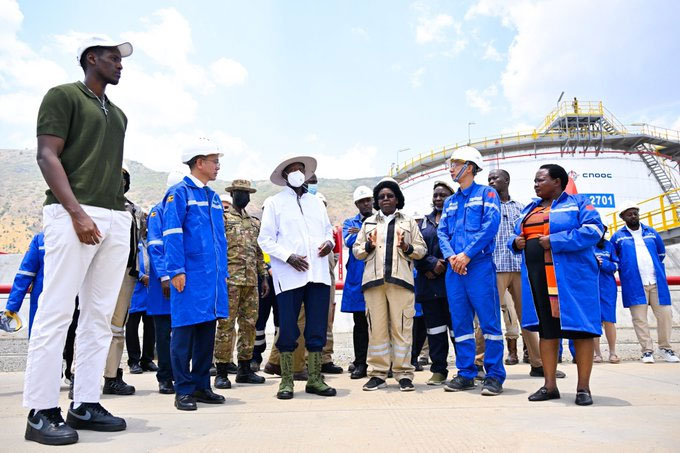
The development of Uganda’s petroleum industry is being driven principally by TotalEnergies, CNOOC Uganda Limited and the Uganda National Oil Company (UNOC). TotalEnergies operates the Tilenga Project in Buliisa and Nwoya, while CNOOC operates the Kingfisher Development Project in Kikuube. According to an update published by the Uganda Investment Authority on July 29, 2026, Tilenga had reached 74% completion by June 30, with 234 wells drilled, while Kingfisher stood at 79% completion. The projects are designed to provide the crude that will ultimately be transported for export through the East African Crude Oil Pipeline (EACOP).
A crucial part of Uganda’s petroleum strategy is the 1,443-kilometre EACOP, which will transport Uganda’s crude from the Lake Albert region through Uganda and Tanzania to the export terminal at Tanga on the Indian Ocean. As of June 30, EACOP was reported at approximately 90% overall progress, with more than 1,443 km of pipeline welded. Uganda is also pursuing a 60,000-barrel-per-day refinery at Kabaale in Hoima, intended to supply petroleum products to Uganda and the wider East African market and reduce reliance on imported refined fuels. The crude itself is relatively waxy and has a pour point of about 40°C, meaning the pipeline requires insulation and electrical heating to keep it flowing.

The arrival of Pearl Sweet therefore represents more than the naming of a new crude grade—it signals Uganda’s transition from decades of exploration toward commercial petroleum production and exports. Ugandan officials have repeatedly presented the oil sector as an opportunity to finance industrialisation, infrastructure and economic transformation, while environmental organisations continue to raise concerns about impacts on communities and sensitive ecosystems. With the government targeting commercial production in 2026, attention is now turning to whether Uganda can translate its petroleum wealth into long-term economic benefits for its citizens while maintaining environmental and social safeguards.