
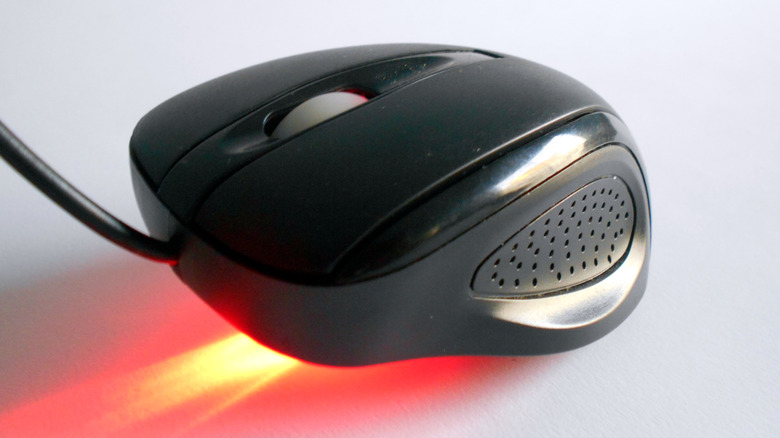
Many people assume the red light is simply for decoration, but it actually plays a vital role in how a mouse tracks movements. Optical mice use a light source, traditionally a red LED to illuminate the surface below. A tiny image sensor then captures thousands of images every second and compares them to detect even the smallest movements. This information is instantly translated into cursor movement on the screen.
The reason red LED became so common is because they are affordable, energy sufficient, and provide enough illumination for the mouse’s optical sensor to accurately detect surface textures. Early optical mice heavily relied on red LEDs because they offered the best balance between performance and manufacturing cost. The red light is also highly visible to the human eye, making it seem brighter than other colours even when it isn’t using significantly more power.
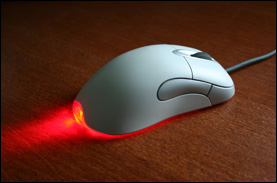
Currently not all modern optical mice use visible red light anymore. Many advanced gaming and premium mice now use infrared or laser technology, which may appear dim or even invisible to the human eye. Laser mice are capable of tracking movement on a wider variety of surfaces, including glossy materials, while infrared optical sensors often provide greater precision and consume less power. Despite these advancements, red LED remains popular because it is reliable, cheap, and works well for everyday computing tasks.
In short the red LED beneath the optical mouse is more than a visual feature, it’s a key part of the tracking system that allows smooth, and accurate cursor movement. While newer technologies have introduced alternative light sources, the familiar red glow continues to be a practical choice for millions of computer mice around the world. It’s a simple yet effective technology that has helped make optical mice one of the most reliable computer peripherals ever created.