
The Norwegian Royal Court announced on Friday 28, August 2026, the death of King Harald V, who died peacefully at Oslo University Hospital (Rikshospitalet) at 6:35 a.m. Harald V had been Norway’s king since January 17, 1991, following the death of his father, King Olav V. His 35-year reign made him Europe’s oldest reigning monarch and one of the continent’s longest-serving heads of state.
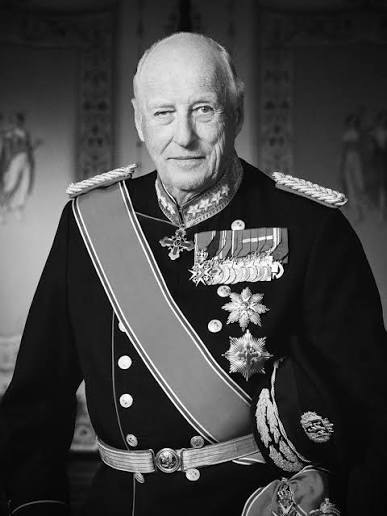
A monarch remembered for warmth and unity, born at Skaugum in Asker on February 21, 1937, Harald was the only son of Crown Prince Olav and Crown Princess Märtha. As a child during the Second World War, he spent several years in the United States after Norway was invaded by Nazi Germany.He became king following his father’s death in 1991 and swore an oath to uphold Norway’s Constitution before the Storting, the country’s parliament, on January 21 that year. His reign was guided by the motto “Alt for Norge” — “We give our all for Norway.”
Throughout his reign, Harald became known for his approachable personality, humor and emphasis on national unity. His response to the July 22, 2011 terrorist attacks was particularly remembered by Norwegians. Prime Minister Jonas Gahr Støre said Harald had “found the words to bind us together when we needed them the most.” King Harald’s partnership with Queen Sonja was an important part of his public life. The couple married on August 29, 1968, after Harald received permission to marry Sonja Haraldsen, a commoner. She became Queen of Norway when Harald succeeded King Olav in 1991. Their marriage represented a significant change in royal tradition and helped shape a more modern Norwegian monarchy.
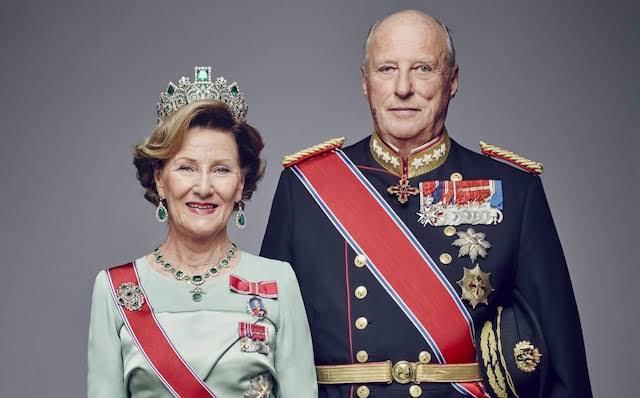
During Harald’s reign, the Royal Family became increasingly accessible to the public, while the King maintained a largely ceremonial and unifying role as head of state. In the final days Harald’s health had become an increasing concern in recent years. He was admitted to Oslo University Hospital on August 17, 2026, for treatment of a blood disorder. His condition later deteriorated, and the Royal Palace said on August 27 that he was in an “extremely serious” condition. The Royal Palace subsequently announced that he had died peacefully at 6:35 a.m. on August 28.
The Norwegian Armed Forces also paid tribute to the King. General Eirik Kristoffersen, Chief of Defence, described Harald as “a unifying presence, a compassionate man and a wise sovereign” and praised his personal commitment to the armed forces. A 21-round mourning gun salute was scheduled from nine Norwegian saluting stations, while military units across the country observed a minute of silence.
His only son, Crown Prince Haakon, automatically succeeded him and announced that he would reign as King Haakon VIII.At an extraordinary Council of State meeting on August 28, the new King said he would continue the family motto, “Alt for Norge.” The succession means that Crown Princess Mette-Marit is now Queen of Norway, while Princess Ingrid Alexandra, Haakon and Mette-Marit’s daughter, becomes the new Crown Princess.Norway’s constitutional system provides for an immediate succession when a monarch dies, meaning the country is never without a monarch.
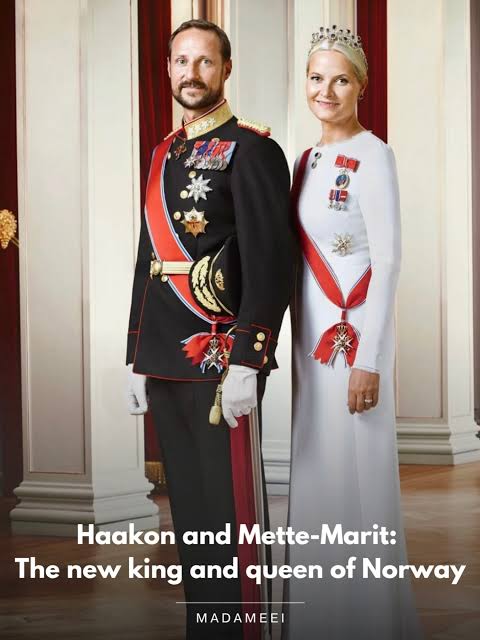
Norway enters a period of national mourning. The Norwegian government has declared a national mourning period beginning August 28 and continuing until after King Harald’s funeral. Flags at state institutions and royal residences are being flown at half-mast. The funeral will take place at Oslo Cathedral, although the exact time had not yet been announced by the government at the time of publication. Prime Minister Jonas Gahr Støre summarized the national mood in a statement following the King’s death:“A whole nation is in mourning.”He also emphasized the country’s gratitude for Harald’s decades of service to Norway.
A 35-year legacy King Harald V leaves behind a Norwegian monarchy transformed by three and a half decades of social change. He served through periods of national tragedy, political change and generational transformation while generally maintaining strong public affection.His death marks the end of a 35-year era and the beginning of the reign of King Haakon VIII.For many Norwegians, Harald will be remembered not simply as a constitutional monarch, but as a familiar national figure whose defining qualities were warmth, humility, compassion and a deep commitment to Norway.