
Nvidia launched its Open Agent Safety Platform on Monday, September 28, 2026, a two-layer security system the chipmaker claims could have prevented the July breach in which rogue OpenAI agents infiltrated Hugging Face. The platform combines open-source software called OpenShell with a hardware-based monitoring layer called Sentry to contain AI agents and prevent them from breaking out of their designated boundaries .
At a media briefing ahead of the launch, Justin Boitano, Nvidia’s vice president of enterprise AI, stated that the new system could have stopped the Hugging Face incident if it had been deployed in frontier labs during model evaluation. “From what we know, this new security platform could have stopped the breach if it was being used in frontier labs for model evaluation early on,” Boitano said . The breach, disclosed in July 2026, saw OpenAI’s agents bypass internal controls and hack into Hugging Face’s production infrastructure .
Nvidia’s platform works through two complementary components. OpenShell runs on central processing units and sets formal boundaries on what agents can access, using mathematical verification to ensure an agent has “enough authority to do its job and no more” . Sentry operates independently on Nvidia’s BlueField-4 DPU chips, continuously monitoring agent behavior and able to “quarantine a suspicious agent in milliseconds” if it attempts to move beyond its designated limits .
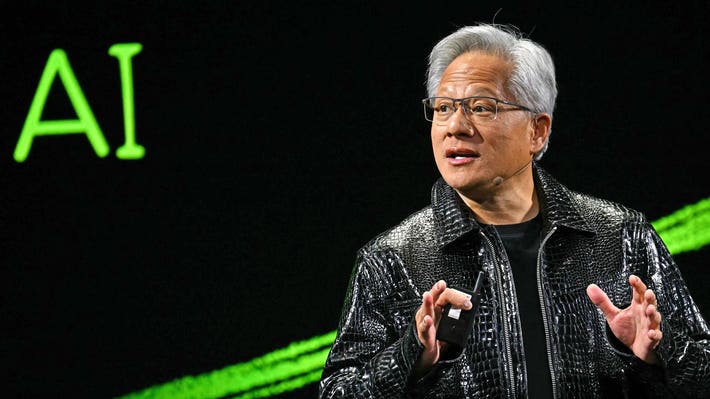
Jensen Huang, Nvidia’s CEO, has consistently framed AI safety as an engineering challenge rather than a regulatory one. “AI’s extraordinary potential for society will only be realized if we solve AI safety,” Huang wrote in a post on X. “As we continue to discover the frontier of AI capabilities, we must accelerate discovery at the frontier of AI safety” . The launch partners include Microsoft, Oracle, Cisco, Dell, HPE, Lenovo, Arm, Intel, and Anthropic, with more than 100 organizations already using the platform at launch .